
medical illness that affects emotions, physical health, and the ability to function day-to-day. With the right support, most patients recover and enjoy a significantly improved quality of life. This article explains what depression is, how it presents, what causes it, and the treatment options commonly recommended in clinical practice. It is written to help patients, families, and anyone seeking reliable information in Bangkok or abroad.
What Is Depression?
Depression (Major Depressive Disorder) is a mood disorder characterized by persistent low mood, loss of interest, and reduced motivation. It must last at least two weeks or longer and interfere with daily living.
It affects:
Emotions
Thinking patterns
Sleep
Appetite
Physical energy
Work performance
Social interactions
Depression is treatable, and early detection improves outcomes dramatically.
Common Symptoms of Depression
Symptoms vary from person to person but often include:
Emotional Symptoms
Feeling persistently sad, empty, or hopeless
Reduced interest in activities
Irritability or emotional sensitivity
Feelings of guilt or worthlessness
Physical Symptoms
Fatigue or lack of energy
Sleep disturbances (difficulty sleeping or oversleeping)
Headaches, muscle pains, or digestive issues
Changes in appetite or weight
Cognitive Symptoms
Difficulty concentrating
Trouble making decisions
Slowed thinking
Memory lapses
If these symptoms last more than two weeks, it may indicate clinical depression rather than temporary stress.
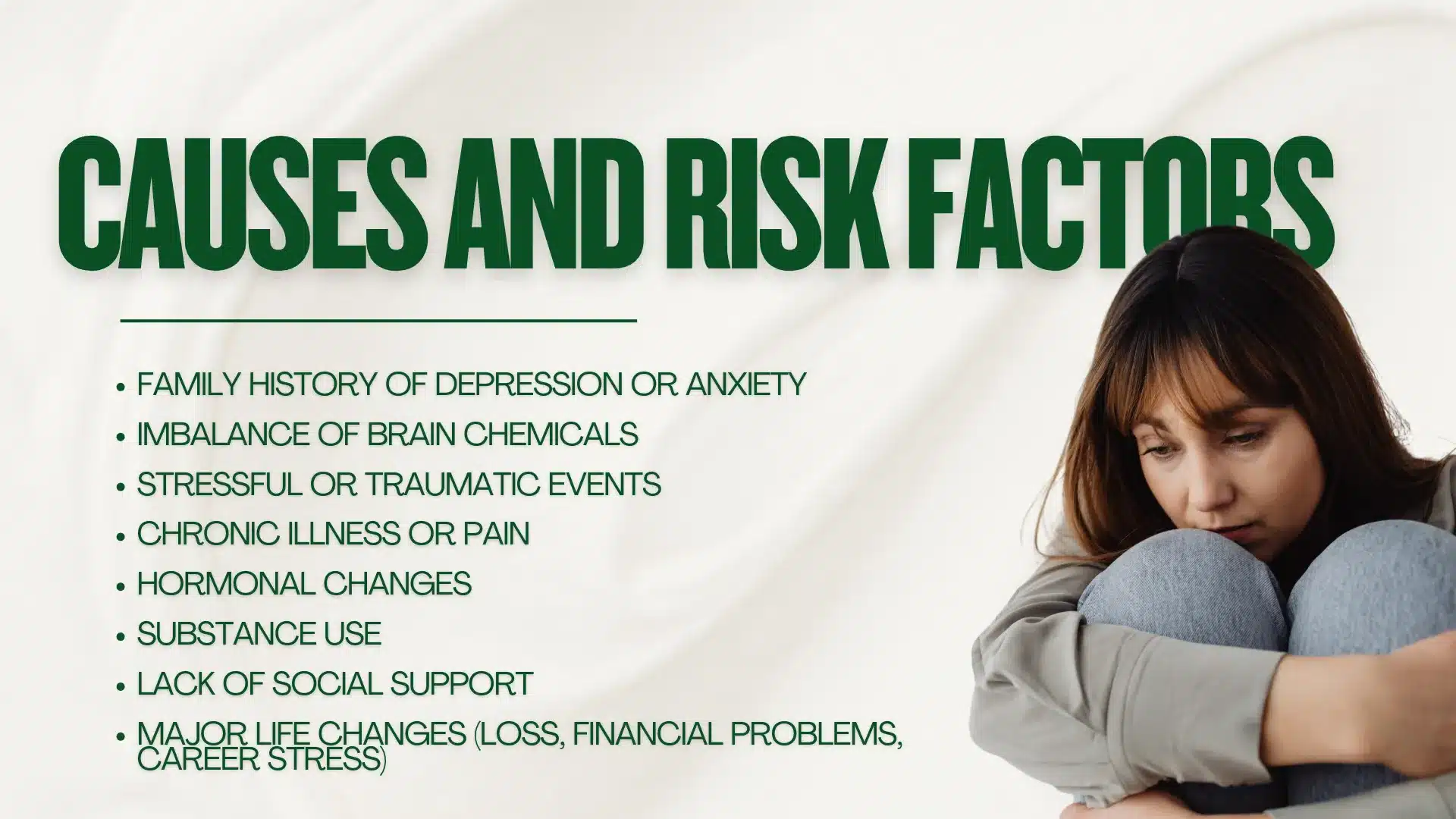
Possible Causes of Depression
Depression rarely has a single cause. Instead, it results from a combination of biological, psychological, and environmental factors.
Biological Factors
Genetics
Hormonal imbalance
Vitamin deficiencies (e.g., B12, D)
Thyroid dysfunction
Chronic illness
Gut-brain axis imbalance
Psychological Factors
Past trauma
Long-term stress
Unresolved grief
Negative thinking patterns
Low self-esteem
Social and Environmental Factors
Workplace pressure
Relationship difficulties
Financial stress
Social isolation
Major life changes
Understanding the root cause is crucial in selecting the most effective treatment approach.
When to Seek Professional Support
You may consider speaking to a doctor or mental health specialist if you experience:
Symptoms persisting longer than two weeks
Emotional difficulties interfering with daily tasks
Sudden changes in sleep or appetite
Concentration problems affecting work or study
Persistent fatigue without a clear reason
Thoughts of self-harm or overwhelming distress
A professional assessment helps distinguish between depression, anxiety, burnout, hormonal imbalance, or other medical conditions that produce similar symptoms.
How Depression Is Diagnosed
The diagnostic process typically includes:
1. Medical Evaluation
A general practitioner (GP) may assess:
Overall health
Medication history
Sleep patterns
Lifestyle factors
Blood tests are sometimes recommended to identify medical causes such as thyroid disorders, anemia, or deficiencies.
2. Mental Health Assessment
This involves documenting symptoms, emotional patterns, and how the condition is affecting daily functioning. Screening tools can help determine the severity of depression.
3. Psychiatric Evaluation
A psychiatrist can confirm the diagnosis, rule out other mental health conditions, and provide guidance on treatment options tailored to each patient.
Evidence-Based Treatment Options for Depression
Treatment varies depending on the severity and underlying causes. Common approaches include:
1. Counselling or Psychotherapy
Therapy helps patients:
Understand their emotional triggers
Modify negative thought patterns
Develop coping strategies
Improve communication and self-awareness
This is one of the most effective long-term treatments.
2. Medication (When Appropriate)
Antidepressants may be recommended when symptoms are moderate to severe, or when therapy alone is insufficient. Medication is prescribed and monitored by a psychiatrist.
3. Lifestyle Interventions
These play a meaningful role in day-to-day improvement:
Regular exercise
Improved sleep habits
Balanced nutrition
Reducing alcohol
Increasing social connection
4. Addressing Physical Contributors
In some cases, treating underlying health issues such as thyroid imbalance, vitamin deficiency, or chronic illness leads to significant improvement in mood.
Types of Depression
Several forms of depression exist:
Major Depressive Disorder (MDD)
Marked by intense symptoms affecting daily life.
Persistent Depressive Disorder (Dysthymia)
Long-term low mood lasting at least two years.
Seasonal Affective Disorder (SAD)
Linked to changes in seasons or light exposure.
Postpartum Depression
Occurs after childbirth.
Situational Depression
Develops in response to difficult life events.
Each type may require a slightly different treatment approach.
Living With Depression
Recovery from depression is possible with the right support. Many people improve through a combination of therapy, lifestyle changes, self-care, and medical guidance. Progress may feel slow at times, but small steps eventually lead to meaningful change.
It is important to remember:
Depression is not your fault
You are not alone
Seeking help is a sign of strength
Treatment works for most patients
When to Consider Professional Support in Bangkok
If you feel unsure whether your symptoms are stress, burnout, or depression, speaking with a healthcare professional can bring clarity. A GP or psychiatrist can help you understand what’s happening and guide you toward appropriate support, whether that involves counselling, lifestyle changes, or medical treatment.
At MedConsult Clinic, patients typically begin with:
GP consultation (to rule out medical causes)
Mental health / psychiatry consultation with Dr. Pui (for diagnosis and treatment planning)
Counselling and structured follow-up
All consultations are conducted with sensitivity and confidentiality.

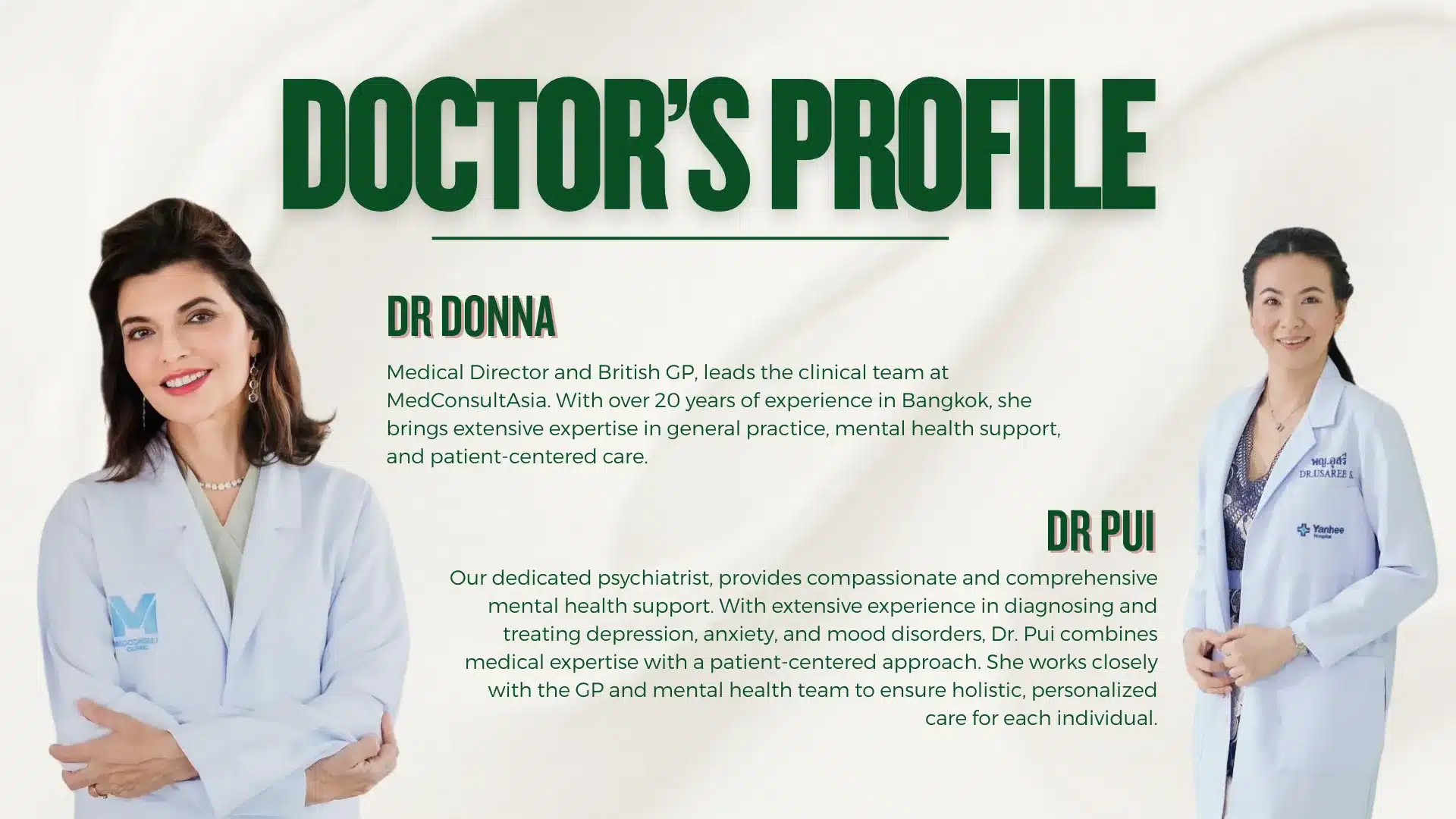
Doctor’s Profile
Dr. Pui, our dedicated psychiatrist, provides compassionate and comprehensive mental health support. With extensive experience in diagnosing and treating depression, anxiety, and mood disorders, Dr. Pui combines medical expertise with a patient-centered approach. She works closely with the GP and mental health team to ensure holistic, personalized care for each individual.
Dr. Donna Robinson, Medical Director and British GP, leads the clinical team at MedConsultAsia. With over 20 years of experience in Bangkok, she brings extensive expertise in general practice, mental health support, and patient-centered care. Dr. Donna is known for her warm approach, clear communication, and deep understanding of the unique needs of both local and international patients.
Final Thoughts
Depression is a medical condition that deserves compassion, understanding, and proper treatment. If you or someone close to you is experiencing symptoms, speaking with a healthcare provider can be the first step toward recovery.
MedConsult Clinic offers medical and mental health consultations for individuals seeking guidance, assessment, or follow-up care in a private and supportive environment.
Frequently Asked Questions (FAQs)
Can depression go away on its own?
Mild symptoms may improve temporarily, but depression often returns or worsens without professional help. Early assessment and treatment significantly improve long-term outcomes.
Is medication the only option?
No. Many patients improve with psychotherapy alone, while others benefit from a combined approach. Treatment is customized depending on severity and personal preference.
How long does treatment take?
Treatment length varies. Some patients improve within a few weeks, while others may need longer-term support. Consistency and follow-up are key parts of recovery.
Can I still work or study with depression?
Yes, many people continue working or studying with the right support. Treatment helps restore concentration, motivation, and daily functioning.